Have you always wanted to visit one of the most sacred places in India? Badrinath Temple is one of the most revered places; every year millions of devotees visit Badrinath. The temple sits high in the Himalayas. It is one of the four holy dhams of the Chardham Yatra and one of the most important temples dedicated to Lord Vishnu.
But visiting the Badrinath temple can be stressful if you do not know where to start. What is Badrinath Temple history? What is the best time to visit? What are the places to visit in Badrinath? And how do you even get there comfortably?
In this complete guide, you will get answers to all these questions. Whether you are a first-time pilgrim or an experienced traveler, this guide will help you plan your Badrinath trip with confidence and ease.
Badrinath Temple: A Place Like No Other
Badrinath Temple is located in the Chamoli district of Uttarakhand, at an altitude of about 3,133 meters above sea level. The Alaknanda River flows right beside it. The temple is surrounded by the snow-covered temples on all sides.
When you visit the temple, you feel a deep sense of peace and divinity. Many pilgrims said that standing in front of the Badrinath temple changed something inside them forever.
Badrinath Temple History: How It All Began
The Badrinath Temple’s history goes back thousands of years. According to Hindu beliefs, Lord Vishnu meditated at this spot for many years. The place was covered in berry trees called “Badri” – which is where the name comes from, “Badrinath.” “Nath” means lord. So Badrinath means “Lord of the Badri forest.”
The temple that we see today was built and restored over many centuries. The great philosopher and saint Adi Shankaracharya is popularly known for discovering and establishing the temple in the 8th century. He found the idol of Lord Badrinarayan in the Alaknanda River and installed it in a cave near the current site.
Over the centuries, the temple was expanded and renovated by many rulers and devotees. The colorful facade and the current structure of the temple were mainly built during the Garhwal Kingdom period.
Today, the Badrinath temple is managed by the Committee of Badrinath-Kedarnath, which makes sure smooth operations and proper darshan for all devotees.
Religious Significance of Badrinath Temple
Badrinath holds an extraordinary place in Hinduism. Here is why:
- It is one of the four holy shrines of Chardhams.
- It is also one of the 108 Divya Desams, the most important Vishnu temples praised in historical Tamil literature.
- Badrinath is also part of the Panch Badri, five sacred Lord Vishnu shrines in Uttarakhand.
- Hindus believe that visiting Badrinath temples washes away all their sins and helps achieve Moksha.
Many pilgrims believe that a person must visit Badrinath at least once in their lifetime. The spiritual energy of the temple is said to be superior.
Badrinath Temple Timings and Darshan Details
It is very important to plan your visit at the correct time. The temple follows a fixed schedule every day.
Daily Temple Timings
| Session | Timing |
| Morning Opening | 4:30 AM |
| Mahabhishek Puja | 4:30 AM to 6:00 AM |
| General Darshan | 6:00 AM to 1:00 PM |
| Afternoon Break | 1:00 PM to 3:00 PM |
| Evening Darshan | 3:00 PM to 9:00 PM |
| Shayan Aarti (closing) | 8:30 PM to 9:00 PM |
Tip: Arrive early in the morning for the best darshan experience. The Mahabhishek Puja at sunrise is a truly special spiritual moment.
When Does the Temple Open and Close Each Year?
Here are the opening and closing details of the temple every year.
- Opening: Late April or early May (on the sacred date of Akshaya Tritiya)
- Closing: November (before winter snowfall blocks all routes)
The exact opening and closing dates change every year based on the Hindu calendar. Always check the official announcement by the government before planning your trip.
Badrinath Weather: What to Expect Throughout the Year
Understanding the Badrinath weather helps you to pack the right thing and stay comfortable during your journey.
Season-by-Season Guide
May to June — Best Time to Visit: The weather is pleasant with temperatures between 7°C to 18°C. This is the peak season. Expect large crowds. Book your travel and accommodation well in advance.
July to August — Monsoon Season: Heavy rains in the monsoon can cause landslides on the mountain roads. Helicopter services may face delays or rescheduling. Less ideal for road travel. However, the landscape looks green and beautiful.
September to October — Second Best Time of the Season; the rains stop. The weather becomes clear and cool, with fewer crowds. This is an excellent time — especially for elderly pilgrims and those traveling by helicopter.
November — Closing Month The temple closes for winter. Temperatures drop quickly. Only visit if you want to witness the closing ceremony.
Places to Visit in Badrinath: Beyond the Main Temple
Badrinath is not about visiting the main temple. The nearby area is full of beautiful and spiritually meaningful spots. Here are the top places to visit in Badrinath, Uttarakhand.
1. Tapt Kund (Hot Water Spring)

It is just below the main temple; Tapt Kund is known for its natural hot water spring. The water stays warm even in the freezing temperatures. Pilgrims take a holy dip here before entering the temple. The water is believed to have healing properties.
2. Narad Kund

This is the sacred pool where Adi Shankaracharya found the original idol of Lord Badrinarayan. It sits very close to Tapt Kund. Many pilgrims visit both together.
3. Brahma Kapal

Brahma Kapal
Brahma Kapal is a flat rocky platform on the banks of the Alaknanda River. Hindus do Pind Daan (rituals for ancestors) here. It is believed that this is the only place where ancestral rites are performed in the presence of Lord Vishnu.
4. Mana Village

Mana Village is just 3 kilometers away from Badrinath. It is the last village of India before the Tibet border. The village is famous for the Vyas Gufa (the cave where sage Vyas wrote the Mahabharata), Ganesh Gufa, and a natural waterfall called Vasudhara Falls. Do not miss this place.
5. Satopanth Lake

Satopanth Lake
People who love adventures: Satopanth Lake is a trekking destination about 24 km from Badrinath. The lake is located at an altitude of 4,600 meters and is shaped like a triangle. It is named after the Hindu Trinity — Brahma, Vishnu, and Shiva.
6. Charan Paduka

A short trek from Badrinath takes you to Charan Paduka — a rock believed to be the footprint of Lord Vishnu. The view from here is amazing, and the trek is manageable for most pilgrims.
7. Badrinath Valley Viewpoint

The valley around Badrinath offers stunning views of the Neelkanth Peak, also known as the “Queen of Garhwal.” Many photographers and nature lovers spend their time here simply taking in the beauty.
How to Reach Badrinath: Your Travel Options
Badrinath is located deep in the Himalayas. Reaching there requires proper planning. Here are your main travel options.
By Road
The major nearest town is Rishikesh, about 295 km away. From Rishikesh, bus and shared taxi services are available for Badrinath. The road journey passes through Devprayad, Rudraprayad, Joshimath, and Govindghat. It is a beautiful but also long and tiring journey that usually takes 10 to 12 hours.
By Helicopter
This is the most comfortable and time-saving option — especially for senior citizens, families with small children, and those with health conditions. Helicopters fly from Dehradun or nearby helipads to Badrinath and other dhams in the circuit.
Read: Kedarnath + Badrinath Same-Day DO Dham Helicopter Yatra 2026 – Itinerary & Tips
Plan Your Badrinath Journey with Syandana Aviation
If you want to visit Badrinath as part of a Do Dham or Chardham pilgrimage, and if you want to travel comfortably without the stress of long road journeys — Syandana Aviation is the right choice for you.
At Syandan Aviation we offer two of the most popular helicopter packages that include Badrinath:
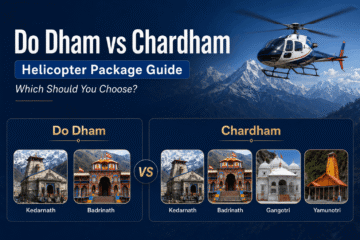
- Do Dham Yatra by Helicopter — Covers Kedarnath and Badrinath in 1 to 2 days. Perfect for pilgrims with limited time or health concerns.
- Chardham Yatra by Helicopter — Covers all four dhams, including Badrinath, in 5 to 6 days. Ideal for a complete sacred circuit.
Why Choose Syandan Aviation
- We have certified and experienced Himalayan pilots
- Modern and well-maintained helicopters
- We offers priority darshans at all dhams
- Dedicated supports for seniors and people with health conditions
- Transparent pricing with no hidden charges
Visit our website today to explore packages and speak with our team. We will help you plan every detail of your Badrinath journey.
Practical Tips for Visiting Badrinath Temple
Before you go, keep these simple tips in mind.
What to Wear
- Wear warm, comfortable clothes. Even in summer, evenings get very cold.
- Carry a heavy jacket, wool socks, and a wool cap.
- Wear comfortable, non-slip footwear for walking on uneven ground.
What to Carry
- A valid photo ID (government-issued)
- All personal medicines
- A small bottle of water
- Snacks for energy
- Sunscreen and sunglasses (UV rays are very strong at high altitude)
- Some cash — ATMs can be unreliable at this altitude
Rules to Follow at the Temple
- Remove your shoes before entering the temple premises
- Do not carry leather items inside the temple
- Maintain silence and respect inside the temple
- Follow the queue and wait patiently for darshan
- Photography may be restricted inside — always check the rules
Health Tips for the Altitude
- Drink plenty of water to stay hydrated
- Walk slowly and do not rush
- If you feel dizzy or short of breath, rest immediately
- Carry prescribed altitude medicine if your doctor recommends it
- Avoid alcohol and smoking before and during the trip
Conclusion
Badrinath Temple is truly one of India’s greatest spiritual heritage sites. The ancient history of the temple, deep religious meaning, stunning natural surroundings, and the pure energy of the place make it unlike any other pilgrimage in the world.
Whether you are interested in the Badrinath temple history, planning to explore the places to visit in Badrinath, or simply want to experience the divine atmosphere — this guide has everything you need to get started.
And if you want to travel there comfortably — without long and exhausting road journeys — consider the helicopter packages offered by Syandana Aviation. Their Do Dham and Chardham helicopter packages make the journey to Badrinath smooth, safe, and truly memorable.
Frequently Asked Questions (FAQs)
1. What is the best time to visit Badrinath Temple?
The best time to visit Badrinath Temple is May to June and September to October. The weather is clear and peasant during these months.
2. How long does it take to complete darshan at Badrinath?
Normally darshan takes around 1 to 3 hours depending on the crowd. But if you book VIP darshan through your helicopter package, you can usually complete it in 30 to 60 minutes with priority entry.
3. Is Badrinath safe for elderly and health-sensitive pilgrims?
Yes, especially when you are traveling via helicopter. The helicopter services remove the long and physically demanding journey.
4. What are the places to visit in Badrinath besides the main temple?
The top places to visit in Badrinath Uttarakhand include Tapt Kund, Mana Village, Brahma Kapal, Narad Kund, Charan Paduka, and the stunning Badrinath Valley viewpoint.